NEWS & MULTIMEDIA
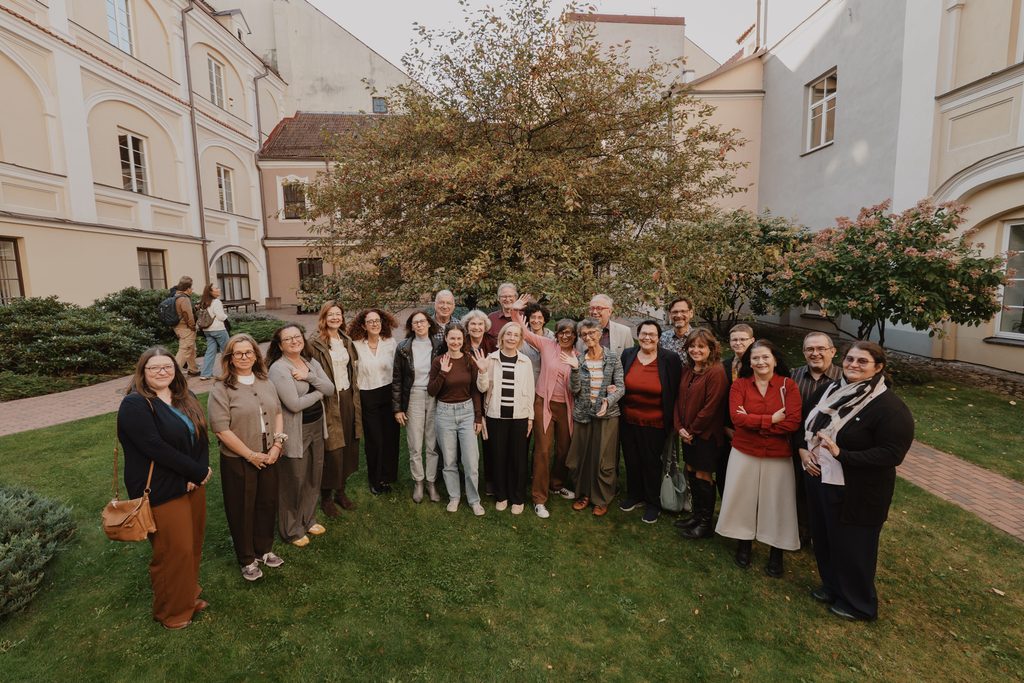
12 October – Vilnius hosted the 2026 General Assembly of the GENERA Network and the Erasmus+ GENERA-COPA project meeting
Vilnius University hosted the 2026 General Assembly of the GENERA Network and the Erasmus+ GENERA-COPA project from 8 to 10 October, bringing together members of the network to exchange experiences, discuss new initiatives and strengthen cooperation on gender equality and diversity in physics as well as to review the progress of the Erasmus+ project GENERA-COPA. The three-day programme opened with a welcome and an introduction to Vilnius University, with contributions from high-level representatives of the university. The first session highlighted Vilnius University’s activities on gender equality and diversity,
including its experience in advancing equality, diversity and inclusion within the institution.
Vilnius University’s role as host underlined its active contribution to the European discussion on equality, diversity and inclusion in physics and science. Participants then exchanged updates from network partners and shared good practices and new initiatives aimed at supporting a more inclusive scientific environment.
A dedicated session focused on the organisational development of the GENERA Network and GENERA-COPA and included elections for its leadership team. Tomas Brage (Lund University), Maria Rosaria Masullo (INFN), Thomas Berghöfer and Lisa Kamlade (both DESY) were reelected as co-Chairs and Coordinator team, ensuring continuity in the leadership and coordination of the network.
In a dedicated GENERA-COPA session project partners reviewed progress to date, discussed upcoming activities and addressed administrative and organisational issues. The meeting continued with discussions on culture in physics and socio-psychological issues in physics education and research, combining expert contributions with collaborative work in smaller
groups. Another session explored the potential impact of artificial intelligence on the field, followed by a joint wrap-up and final conclusions. The General Assembly concluded with an excursion to Trakai Island Castle, providing participants
with an opportunity for informal exchange and further networking. By hosting the General Assembly, Vilnius University provided an important meeting place for the European GENERA community and supported dialogue on the future of equality and diversity in physics and research. The event also strengthened connections between institutional practices, network initiatives and collaborative European projects. For GENERA-COPA, the meeting provided a valuable opportunity to coordinate the next phase of activities and further develop its outreach and dissemination strategy.
The discussions in Vilnius highlighted the importance of turning shared experience and project results into accessible resources for researchers, academics and wider audiences. The focus on fact sheets, interviews and videos will contribute to making the project’s work more visible and accessible in the coming months. During the meeting, the outreach team was busy conducting interviews and taking short video recordings for the production of a promotional video. At the same time, the exchange on culture, education, research and artificial intelligence opened further perspectives for future collaboration within the network. The renewed GENERA leadership will continue to coordinate the network’s activities and support cooperation among its members.
The Vilnius meeting therefore marked an important moment for both the continuing development of the GENERA Network and the ongoing work of GENERA-COPA. The next GENERA- project meeting is planned for spring 2027 in Novi Sad, Serbia, where partners will reconvene to review progress, strengthen collaboration and plan the next steps towards achieving the project’s objectives.
– for further info:
READ THE NEWS ON VILNIUS UNIVERSITY WEBSITE > https://www.ff.vu.lt/en/news/4069-vilnius-university-hosts-the-general-assembly-of-the-genera-network
20 April 2026 – Working meeting in Oviedo
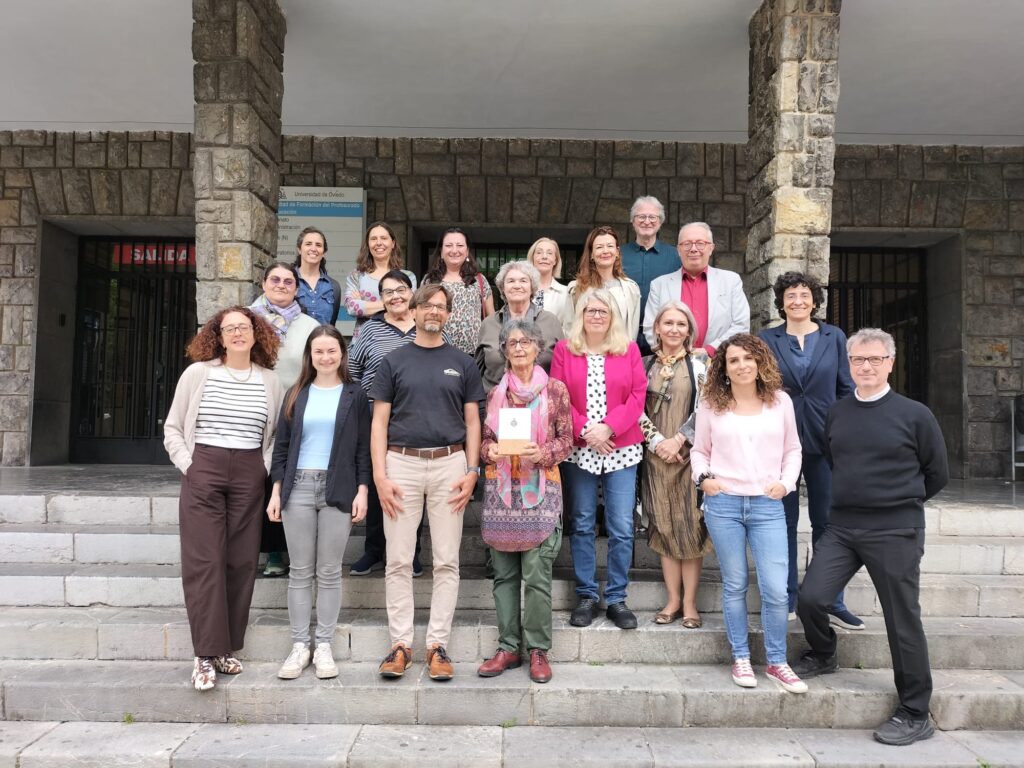
On April 20 and 21, the University of Oviedo hosted the first in-person workshop of the European GENERA-COPA project, an initiative focusing on higher education, equality, and diversity. The meeting brought together 19 participants from 12 European institutions, fostering the exchange of ideas and coordination among the working groups in the project. During the sessions held in Oviedo, the various groups made progress in reviewing preliminary results, defining future lines of action, and strengthening collaboration among participants.
The work was structured around five key areas: The first, was dedicated to project management, addressing the general project coordination and monitoring of objectives. The second and third focused on the integration of the gender and diversity perspective in higher education, especially in the fields of math-intensive Science, Technology, Engineering and Mathematics (STEM) as well as inclusive teaching approaches. The fourth group worked on the development of innovative mentoring programs aimed at improving academic and professional support. Finally, the fifth axis focused on the dissemination of results and transfer of knowledge.
The meeting made it possible to consolidate the bases of collaboration and make significant progress in achieving the planned objectives.
30 December 2025 – GENERA‑COPA: New Erasmus+ Project Receives Funding to Promote Gender and Diversity in STEM
European initiative awarded Erasmus+ funding to transform STEM education through gender and diversity integration, launched at the GENERA General Assembly in Limerick.
With the main aim to address the critical challenge of attracting and retaining minoritized groups in science and research, the GENERA‑COPA project has been selected as one of only 25 projects funded out of 124 proposals in the latest Erasmus+ call, receiving €400,000 to implement innovative activities that promote gender and diversity in math-intensive STEM fields. GENERA-COPA arose from collaboration within the GENERA Network and was officially kicked off during the General Assembly of this network held beginning of September 2025 at the University of Limerick (event details).
The project seeks to transform higher education curricula and institutional culture by integrating gender and diversity perspectives. By building university and research capacity and training local “critical friends” as trainers across Europe, the project ensures the sustainability of its initiatives and long-term transformation of educational practices. With this funding, GENERA‑COPA is poised to make a significant contribution to the European STEM landscape, promoting equality, diversity, and inclusion across higher education institutions.
The project focuses on the integration of a gender and diversity perspective in the math-intensive STEM fields, which has been suggested by L. Schiebinger (1999, Has Feminism changed Science, Cambridge, MA: Harvard Univ. Press.) as a major strategic approach to implement gender equality and diversity in addition to improving the number of women in STEM and the culture of research as it is performed in research institutions in STEM.
Increasing internationality, interdisciplinarity and working in larger and more diverse groups place new demands on young scientists. Within the project an introductory course will be developed, tested and implemented with the intention of preparing students and young scientists for these new requirements. This is not yet part of university education, however, urgently needed to perform research successfully and efficiently, contribute to a more inclusive higher education system and improve the job opportunities of young researchers.
The existing learning culture will be investigated and further develop with new approaches in inclusive teaching and learning, including universal design and STEAM education in the math-intensive STEM fields. Particular attention should be paid to how to best use online Learning Management Systems (LMS), Self Learning, and Train-the-Trainer methods.
Furthermore, the project will work in the direction of improving the direct support of master and PhD students in building up a successful career. In current institutional gender equality and diversity plans mentoring is one of the preferred measures to improve existing inequalities. Existing mentoring programs will be examined and methods developed to increase their effectiveness in terms of equality, diversity and inclusion. Innovative forms of mentoring will be developed and tested that couple mentoring with networking and active sponsoring to offer an early introduction to international cooperation in science that is difficult to convey through participation in courses.
The project targets internal audiences, including partners, staff, and associated collaborators. The primary external audience includes higher education teachers, early-stage STEM researchers, mentors and mentees, diversity and inclusion officers, and math field intensive departments and institutions. Secondary audiences comprise policymakers, science communication organizations, advocacy groups for women and minoritized groups in STEM, and the general public interested in equality and STEM.
Through these activities, GENERA‑COPA aims to support institutions in introducing gender and diversity perspectives into curricula, enhance their capacity for inclusive education, and embed trained trainers to sustain ongoing development. As part of the GENERA Network, the consortium brings together extensive expertise and experience in applying gender perspectives and promoting equality, diversity, and inclusion within math-intensive STEM disciplines.
The project involves multiple European universities and research institutions collaborating for 3 years to create a more inclusive and equitable learning environment; it is coordinated by the German research centre DESY, further partner organisations are the Italian National Institute for Astrophysics (INAF), the Italian National Institute for Nuclear Physics (INFN), Weizmann Institute of Science (Israel), University of Limerick (Ireland), University of L’Aquila (Italy), Vilnius University (Lithuania), University of Novi Sad (Serbia), University of Alcalá and University of Oviedo (both Spain), Lund University (Sweden), and the Swiss Physical Society.
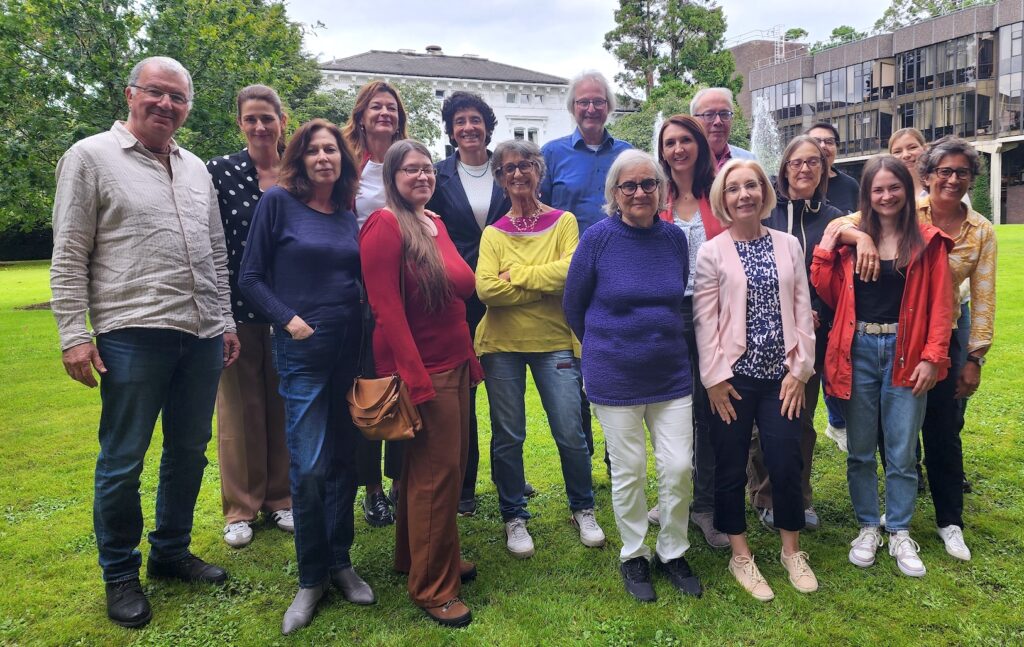
5 September 2025 – Kick Off meeting in Limerick
The ERASMUS+ Cooperation Partnership GENERA-COPA officially kicked off with an engaging meeting coordinated by Thomas Berghoefer (DESY). The session opened with a focus on Gender & Diversity in math-intensive STEM fields (WP2), featuring presentations by Yossi Nir (Weizmann Institute) and Deirdre Ní Eidhin (University of Limerick). This was followed by a discussion on Innovative Education approaches (WP3), highlighting inclusive teaching, universal design, and STEAM methodologies, presented by Tomas Brage (Lund University) and Dalia Šatkovskienė (Vilnius University). Next, the team explored Innovative Mentoring, Sponsoring, and Networking Approaches (WP4) with insights from Maria Rosaria Masullo (INFN), Milica Pavkov Hrvojević (University of Novi Sad), Sabina Pellizzoni (INFN), and Elvira Toth (University of Novi Sad). The meeting continued with a session on Dissemination, Outreach, and Target Group Coordination (WP5), led by Thomas Berghoefer (DESY) and Yolanda Lozano (University of Oviedo). The kickoff concluded with a presentation on the Swiss project contribution funded by Movetia, delivered by Maya Widmer and Philipp Schmidt-Wellenburg (SPS). The meeting set the stage for collaborative work across the partnership’s ambitious activities. agenda